
Fall Newsletter 2026
SR2S Newsletter Fall 2026
A major safety upgrade has arrived at seven Marin County schools: new 15 mph school zones are now slowing traffic on roads where students walk, bike and cross on their way to class.
The new school zones benefit Bacich Elementary, Manor Elementary, San Domenico School, Tamalpais Valley Elementary, Tamalpais High School, Mount Tamalpais School and Loma Verde Elementary. The reduced-speed areas apply to designated roads surrounding each campus, with detailed maps showing exactly where the new limits are in effect.
The change lowers speeds from 25 mph to 15 mph in the designated zones when school is in session. While a 10-mph change may not sound dramatic, Marin County officials say lower speeds can make an important difference in protecting people on foot and bikes.
“Lower vehicle speeds improve safety by giving drivers more time to react and reducing the severity of a collision if one occurs,” said Ana Pallas, Public Information Officer for the County’s Public Works Department. “This is particularly important around schools, where children and families may be walking, biking and crossing the roadway.”
Jen Shriber, transportation planner with consulting firm Parametrix, noted that the new limits are targeted to the times when students need them most.
“The 15 mph limit is only enforceable when school is in session, so the change won’t reduce speed limits around the clock, but it’s an important step towards improving safety when students and their families are walking and biking to and from school,” Shriber said.
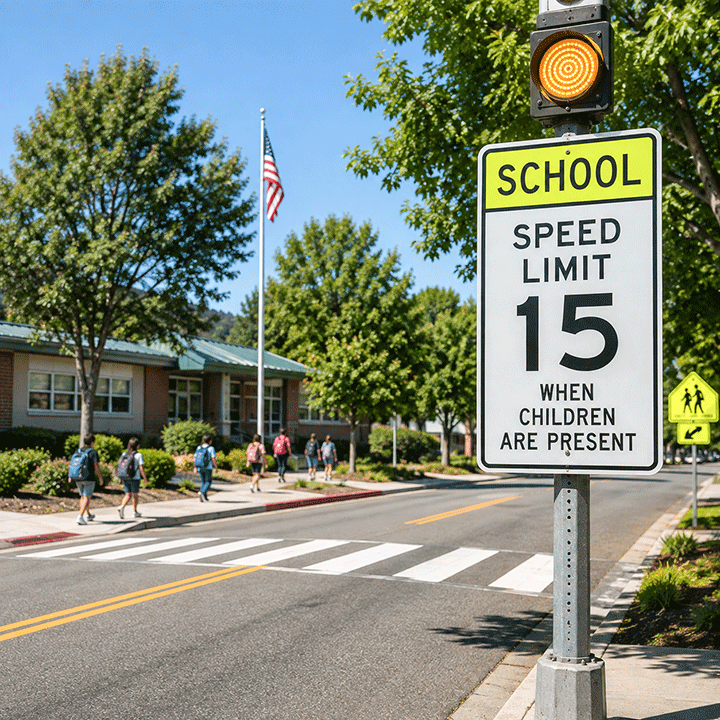
The seven locations were selected based on eligibility requirements established under the California Vehicle Code. Each location was evaluated against those criteria to determine where a 15-mph school-zone speed limit could be implemented.
The goal is straightforward: slower traffic and safer streets around schools, particularly during busy arrival and dismissal periods when more children and families are sharing the roadway.
Drivers should watch for the new signage and reduced speeds when approaching the affected campuses. Enforcement and penalties for speeding violations fall under the California Highway Patrol.
For now, these seven schools are the only locations identified for the reduced school-zone speeds, and the county says no additional locations have been identified at this time.
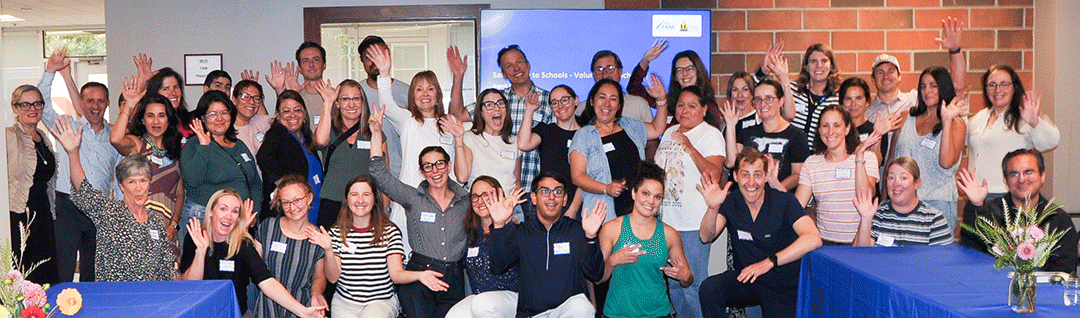
Forty parent volunteers, family liaisons, and principals from 25 elementary schools from all over Marin County joined the latest Safe Routes to Schools volunteer luncheon on August 27. It was a great opportunity for the attendees to mingle, exchange ideas, and share experiences. Safe Routes hopes that all participants left with plenty of inspiration—and the tools they need to make their fall events a success.
HERE IS A LINE-UP OF THE FALL EVENTS
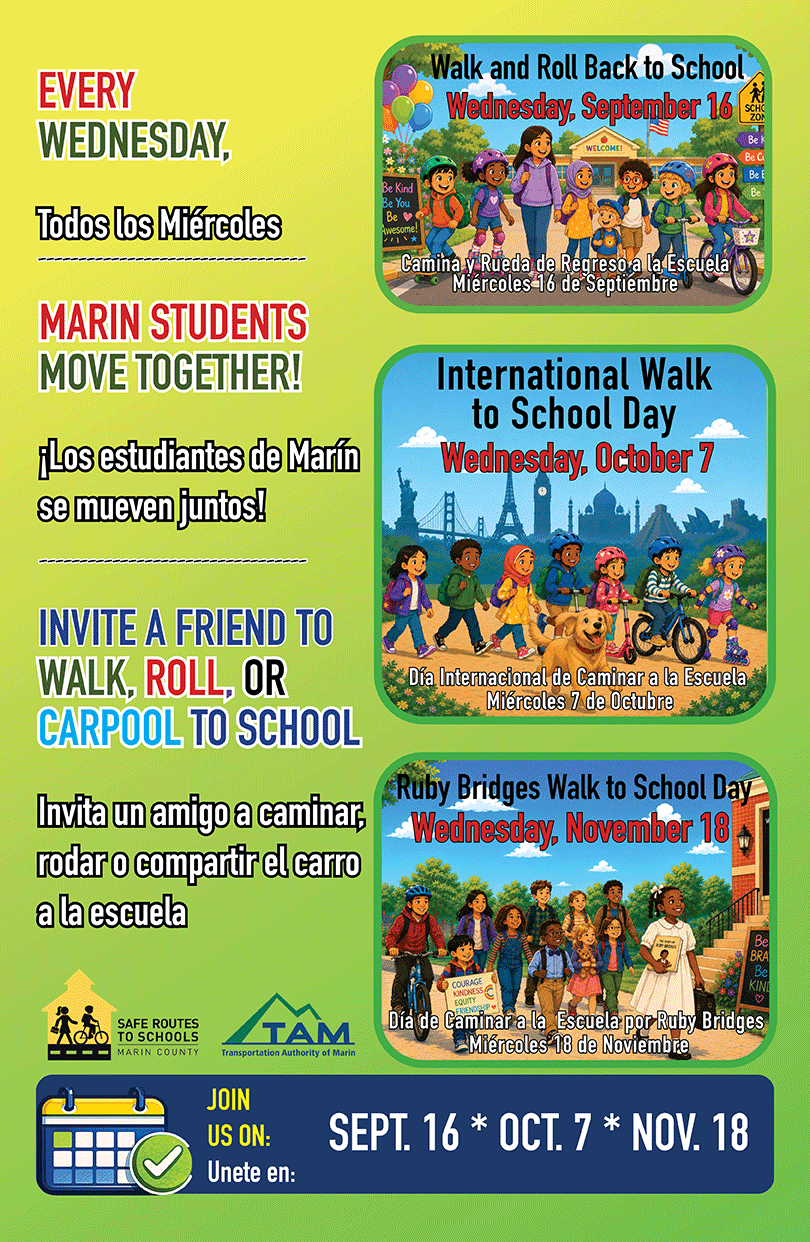
Sept. 16: Walk & Roll Back to School
Oct. 7: International Walk to School Day
Nov. 18: Ruby Bridges Walk to School Day
Dec. 2 or 9: Optional Winter Walk & Roll
The theme for this fall is Community and Consistency. The purpose is to inspire students and their families to walk and roll not only on event days, but as often as possible—and to bring friends, neighbors and classmates along for the journey.
Active travel is about more than just getting to school. Walking and rolling together can spark new friendships, create lasting memories, build healthy habits, and help create a greener planet—one trip to school at a time.
Posters and social media graphics are available for download at saferoutestoschools.org. Let’s spread the word and make this a fall full of walking, rolling and community.
When it comes to walking and rolling to school, Marin students are already ahead of the pack.
About 33% of students walk, bike or roll to school, compared with just 11% nationally. And within Marin, some schools are pushing those numbers even higher.
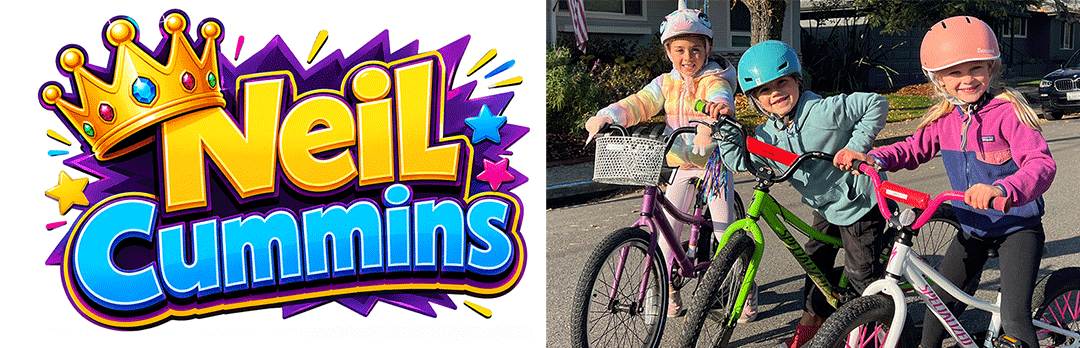
According to the latest Safe Routes to Schools student travel survey, conducted last spring, Neil Cummins Elementary has claimed the No. 1 spot for active travel, followed by Brookside at No. 2, Ross at No. 3, Bahia Vista at No. 4 and Wade Thomas at No. 5.
Active trips include all modes of transportation in which students use their feet to get to school. And while the latest survey gives us a new champion, looking back at Safe Routes data since 2008 shows that Neil Cummins’ rise to the top did not happen overnight.
The numbers tell the story. Neil Cummins started with 28% active trips in 2008, when Safe Routes started conducting its biannual surveys. Then, it moved to the top of Marin’s leaderboard this spring with an impressive 67%, more than doubling its active travel rate over nearly two decades. This is a great example of how walking and rolling can become part of a school’s everyday culture.
“Biking to school is such a great way to start our day. We get fresh air and a little exercise and it really wakes the kids up!” says Neil Cummins parent Jen Glare. “The school does an amazing job promoting biking and walking to school. They make it very easy for families with accessible routes and lots of crossing guards.”
Glare’s second grader, Xander, feels proud when he bikes to school and locks up his bike by himself.
Safe Routes also tracks green trips, a broader category that includes walking and rolling plus carpooling and buses. When those modes are added, the picture changes. Marin shines here, too. In the latest survey, 51% of student trips countywide were green, compared with about 38% nationally.
The leaders of the green travel last spring were, in this order, White Hill, Henry Hall, Neil Cummins, Dr. Martin Luther King Jr. Academy, and Brookside.
When comparing the leaders of the active travel category vs. green travel, it is apparent how Marin schools are very different. Students at some neighborhood schools live close enough to walk or bike, while schools drawing from larger areas may depend more heavily on carpools and buses. Either way, the goal is the same: fewer individual cars making the trip to and from school.
With students walking and rolling at nearly three times the national rate, schools are competing in a county where the bar is already remarkably high. Given that, one might wonder, which one is going to be the leader of active and green travel this fall?
If you want to see how your school is doing and how it compares to others, click here.
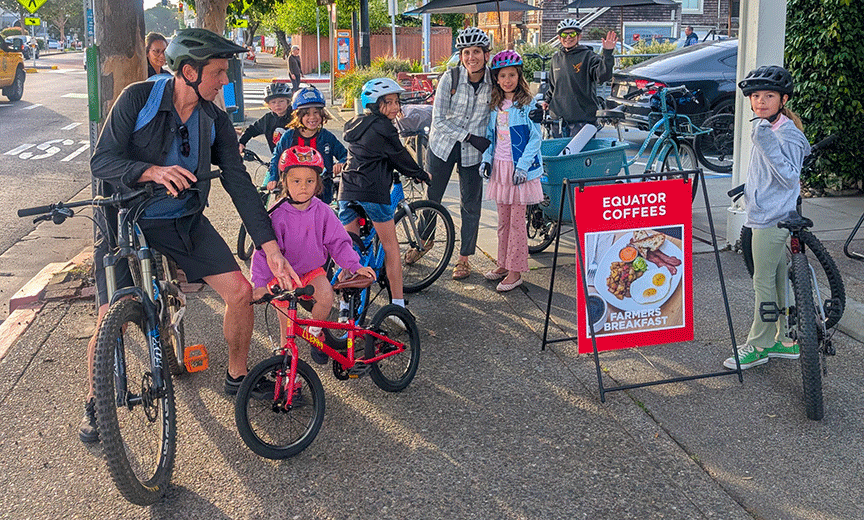
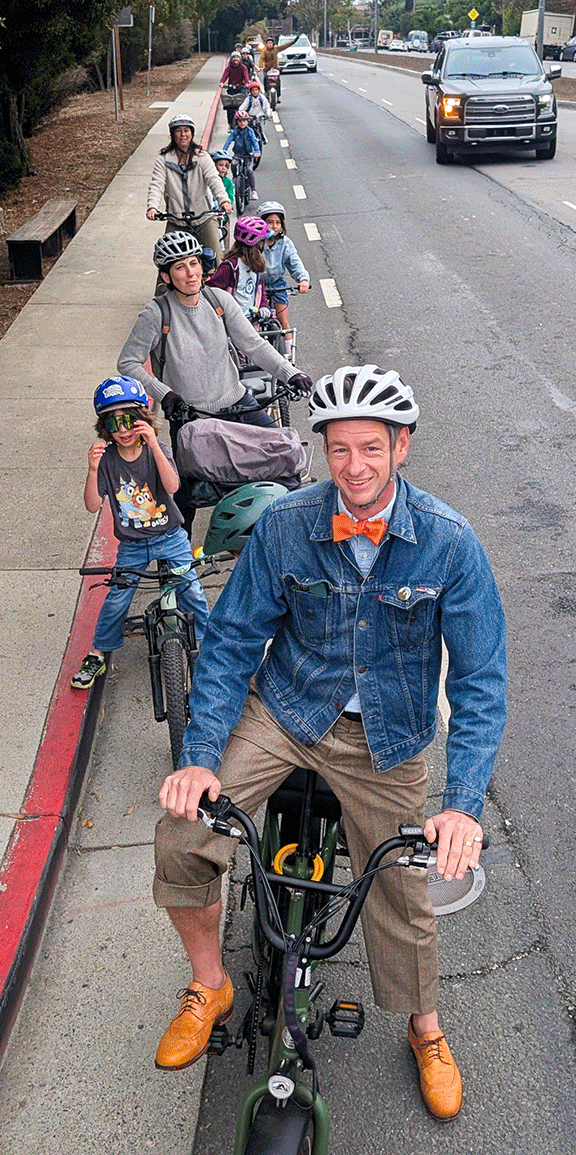
Every Friday morning, a growing group of Sausalito students and parents meets at Equator Coffee, hops on their bikes and rides together to Dr. Martin Luther King Jr. Academy. What started as a grassroots effort among a few local parents is approaching its first anniversary as the Sausalito Bike Bus.
The group was founded by Kieran Culligan, a Dr. Martin Luther King Jr. Academy parent and Sausalito resident, who had already been biking to school regularly with his own children when he decided to invite more families along.
Culligan credits friend and local advocate Aaron Roller, who participated in an earlier Sausalito bike bus when his children were younger, with helping spark the idea. Seeing the growing popularity of bike buses around the country convinced Culligan that the time was right to revive the concept locally.
“I had already been riding bikes to school with my own kids as often as possible, sometimes along Bridgeway and sometimes traversing the hills, and other neighborhood kids would occasionally join us,” Culligan said.
A few parents decided to turn those informal rides into something more consistent, establishing a regular route and schedule. The Sausalito Bike Bus launched in mid-October 2025, initially riding every other Friday. Now, as participation grows, the group is trying out a weekly Friday schedule.
Depending on the weather and time of year, the group ranges from six or seven people to as many as 14 riders. Most are Dr. Martin Luther King Jr. Academy students and families, but the bike bus is open to anyone in the community traveling in the same direction, including children heading to local preschools and daycares.
The ride begins at Equator Coffee at 8 a.m., departs at 8:15 a.m. and arrives at Bayside MLK Academy around 8:30 a.m. Families can find the current schedule, route map, safety guidelines, FAQs and information about joining the group online.
The effort remains entirely grassroots, organized by parents without formal staffing or administrative assistance from the school. Culligan said Bayside MLK has nevertheless been welcoming and supportive of students biking to campus. The new campus also includes amenities that encourage active transportation, including a dedicated bike cage.
For Culligan, community involvement extends beyond the bike bus. He is also president of the RISE UP! 94965 Foundation, an all-volunteer nonprofit supporting students at Dr. Martin Luther King Jr. Academy.
As the Sausalito Bike Bus approaches its first anniversary, the move toward weekly rides marks another step forward for the grassroots effort, turning a simple trip to school into a regular opportunity for children and parents to ride together, build community and make biking part of their routine.
If you would like help organizing your own Bike Bus, please contact Safe Routes to Schools program director, Erin Kahn at [email protected].
The journey to and from school can be just as rewarding as the destination.
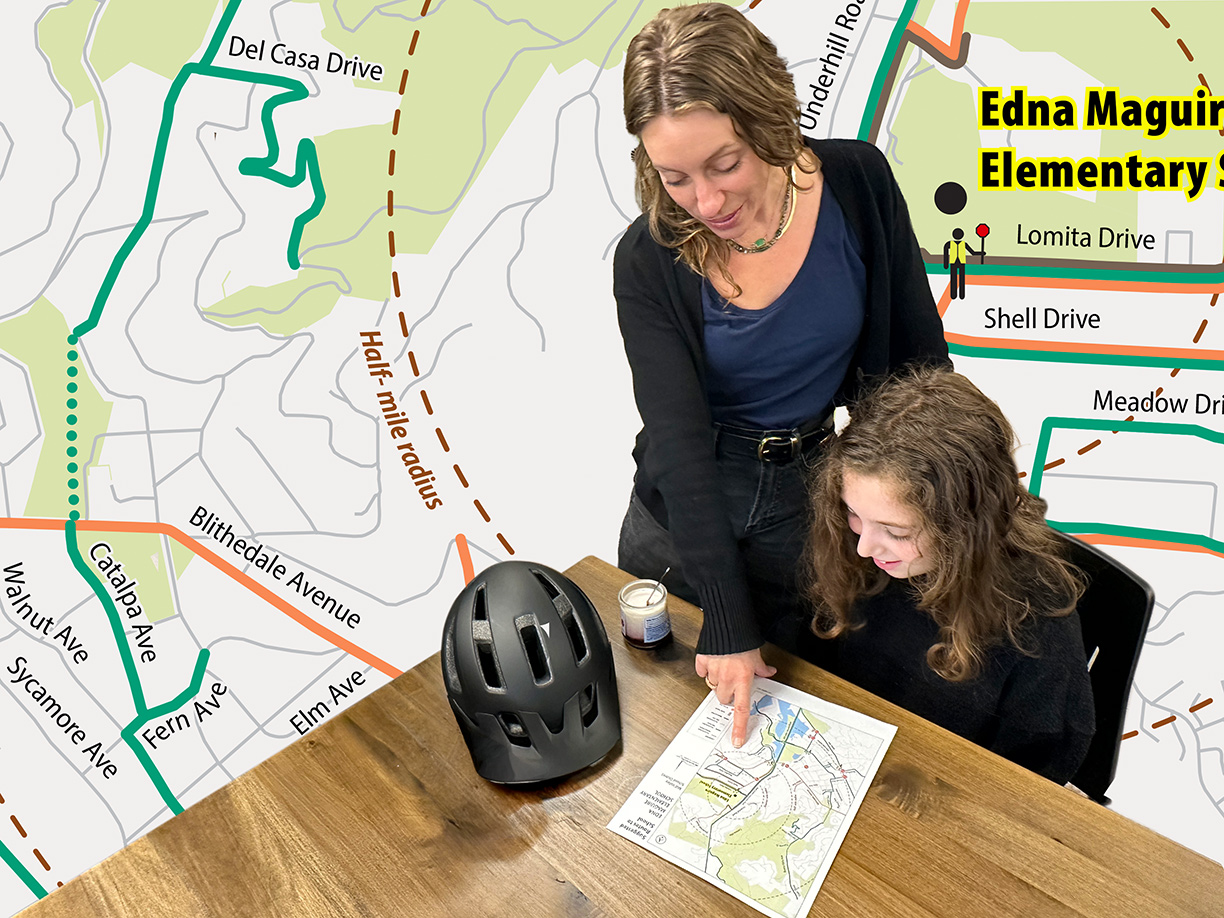
Beginning this fall, families at 36 public schools across Marin County can use new Suggested Route Maps from Safe Routes to Schools to help walk or roll to and from campus. Whether students travel on foot, by scooter, skateboard, wheelchair, or bicycle, the maps highlight the suggested routes to schools.
The new maps are the product of more than a year of teamwork. Safe Routes to Schools traffic engineers worked alongside school administrators, parents, elected officials, and, in some cases, students to identify the best routes to school. Engineers from Parametrix, the program’s engineering consultant, studied traffic patterns, reviewed infrastructure, and fine-tuned each map, which were approved by each jurisdiction’s Public Works department to identify practical, family-friendly routes.
Families can find the maps, organized by school district, on the Safe Routes to Schools website. Click here to explore your Suggested Route.
The new maps arrive just in time for an exciting fall lineup of Walk & Roll events. This semester’s overarching theme, “Community and Consistency,” encourages students to make active transportation part of their weekly routine by inviting a friend to walk, roll, or carpool to school. Not just on event days, but all year long.
For more information, visit saferoutestoschools.org.
Safe Routes and Sustainable Marin Schools
Join Forces
By Lisa Clarke, Executive Director SMS
This year, Sustainable Marin Schools (SMS) is officially joining Safe Routes to Schools, supporting its encouragement program and helping more students and families choose walking, biking, carpooling, taking the bus, and Park and Walk.
For the past four years, SMS has transformed Novato campuses into living laboratories for hands-on environmental education and climate action. Joining Safe Routes feels like a natural next step, connecting our sustainability mission with healthier, safer, greener, and more community-oriented ways for students to get to school.
After working informally with Safe Routes, we saw firsthand how walking, biking, carpooling, or taking the bus to school can bring students, families, and neighbors together while increasing engagement across school communities.
As part of the program, SMS will bring its Green Team students into Safe Routes activities, adding their energy, creativity, and commitment to the environment. It’s a great match: Safe Routes brings deep expertise in active and green transportation, while SMS brings years of trusted relationships in Novato schools and experience turning sustainability goals into student-led action. Together, we hope to build a foundation for peer-led programs on campus, empowering students to inspire their classmates and help shape how their school communities travel.
The partnership also opens an exciting new chapter for SMS. While Novato has been our home base, our work with Safe Routes will bring us into San Rafael and Marin City schools for the first time. We’re excited to connect with, learn from, and grow alongside students and families in these new communities.
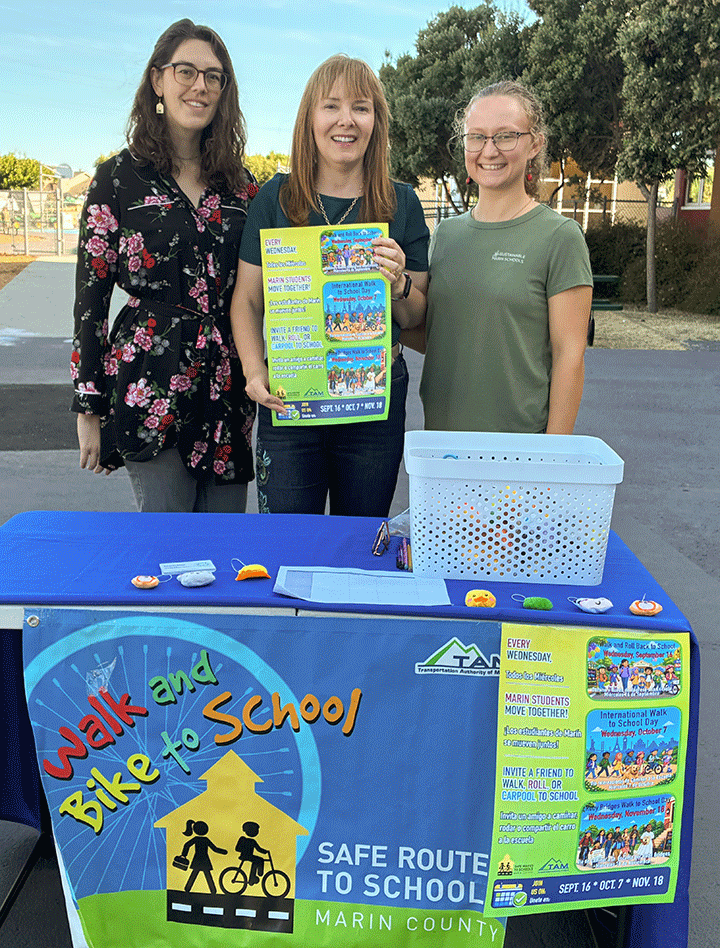
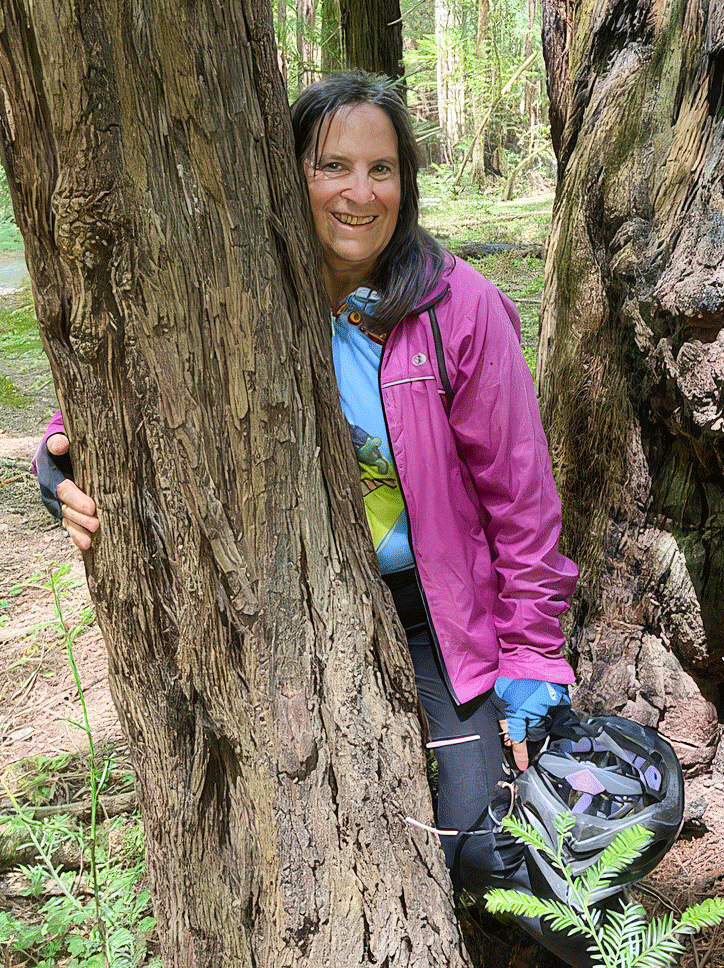
Wendi Kallins, co-founder of Marin Safe Routes to Schools, will receive a National Lifetime Achievement Award recognizing her decades of leadership and lasting influence on the Safe Routes movement in Marin and across the country.
Kallins will be honored by the Safe Routes to Schools Partnership with the Lifetime Achievement Award at the 2026 Safe Routes to School National Conference, taking place October 20–22 in Minneapolis, Minnesota.
The award was introduced last year to recognize individuals whose leadership and contributions have made an enduring impact on Safe Routes programs and the people who carry out that work.
In announcing the recognition, Safe Routes Partnership Deputy Director Dave Cowan highlighted Kallins’ role in helping launch Marin Safe Routes to Schools, her decades of leadership with the program, and her influence on Safe Routes practitioners nationwide.
“I am honored to be recognized for the years of service I gave to the Safe Routes to Schools movement, not just for the Marin program but the seeds we planted training others across the country,” Kallins said. “I was on the steering committee that launched the Safe Routes Partnership and I’m grateful to be recognized by this prestigious organization started by my good friend and colleague Deb Hubsmith.”
Kallins helped establish Marin’s program more than 25 years ago, when Safe Routes to Schools was still a relatively new concept in the United States. What began locally grew into a model that helped demonstrate how education, encouragement and community involvement could change the way children travel to school.
The Lifetime Achievement Award recognizes both Kallins’ role in building Marin Safe Routes to Schools and the broader legacy of her work: helping plant the seeds for a movement that has reached communities across the country.
Nominations are now open through November 1 for the 2026 Buddy Up Contest, Safe Routes to Schools’ countywide celebration of students who make the trip to and from school together.
Now in its fifth year, the contest invites groups of two or more students who walk (or park and walk), bike, carpool, or ride the bus together. Traveling with buddies makes the journey more fun, helps healthy habits stick, and offers greater visibility and safety in numbers. Along the way, everyday trips to school can become opportunities to strengthen friendships and make lasting memories.
Anyone can nominate a Buddy Group – parents, teachers, school staff, neighbors and other community members. Tell us what makes your favorite group exceptional. The more nominations a group receives, the better its chances of winning, and a compelling story can make a group stand out.
Four winning groups from across Marin County will each receive a $50 award.
Nominate your favorite buddies here.

PAST NEWSLETTERS
SR2S Newsletter Summer 2026
Safe Routes to SchoolsNames New Director Safe Routes to Schools welcomes Erin Kahn as its new Program Director. A born-and-raised Marin native, Erin has a deep personal connection to the organization shaped by years of biking her children to school and witnessing the independence and confidence that experience fostered. Her work as a Safe Routes parent volunteer at Bacich Elementary has...
SR2S Newsletter Spring 2026
Join us on February 12 from 10:30 to 12:30 at the offices of the Transportation Authority of Marin (TAM) , located at 900 Fifth Ave., San Rafael. Have lunch with us, connect with fellow volunteers, and pick up your supplies. RSVP to [email protected] or [email protected]. Students Pedal Up Support withBike Drive for Marin Families Students at Kent Middle School are helping more...
SR2S Newsletter Fall 2025
Marin Sees Uptick in Active Trips to Schools About 32 percent of Marin students are now walking or rolling to school—nearly triple the national average—according to Safe Routes to Schools. The latest figures, collected for the 2024–2025 school year, come from in-class tally surveys conducted twice a year and the program’s new online dashboard, which also makes it easier to track long-term...
SR2S Newsletter Summer 2025
New Law Bans Class 2 E-Bikes for Kids Under 16 in Marin Starting this summer, it will be illegal for anyone under 16 to ride a Class 2 throttle e-bike in Marin County. Under California’s new AB 1778 law, these motorized bikes—which do not require pedaling and can reach higher speeds—are now restricted due to growing safety concerns. The law also mandates helmet use for all Class 2 riders,...